Muscle Density vs. Fat Density: Why Volume Matters More Than Weight It was cheap — under $30.
12 Muscle Density vs. Fat Density: Why Volume Matters More Than Weight He stood at the window, watching the street. He didn't know what he was looking for.
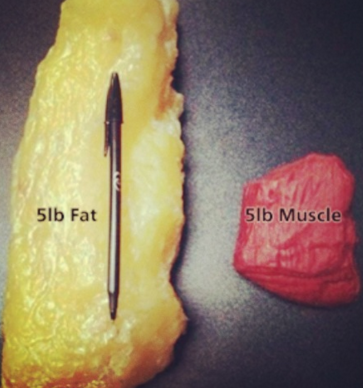
A pound of fat and a pound of muscle weigh the same. But a pound of fat takes up about 20% more space. Muscle density is about 1.06 grams per cubic centimeter. Fat density is about 0.9 grams per cubic centimeter. The difference doesn’t sound like much. But over the course of a body recomposition, it changes how you look and how your clothes fit. I’ve had clients who lost zero pounds on the scale but went down two dress sizes. Their bodies got smaller without getting lighter. The scale didn’t capture that. Their jeans did. The Lean Body Mass Calculator can help you track your muscle vs. fat mass.
The volume difference in real terms
Let’s do the math. If you lose 5 pounds of fat and gain 5 pounds of muscle, your weight stays the same. But your volume changes. Five pounds of fat occupies about 2.5 liters of space. Five pounds of muscle occupies about 2.1 liters. That’s a reduction of 0.4 liters – about the size of a can of soda. Not huge. But if you lose 10 pounds of fat and gain 10 pounds of muscle, the volume reduction is about 0.8 liters – the size of a small water bottle. That’s noticeable. That’s why your jeans get looser. I had a client who came to me at 180 pounds and 25% body fat. Her goal wasn’t weight loss. It was body recomposition. She wanted to look leaner without dieting. We focused on strength training and protein. Six months later, she was 182 pounds and 20% body fat. She looked leaner. Her pants were looser. Her weight was higher. The scale said she gained 2 pounds. The mirror said she gained progress. The Body Fat Percentage Estimator can show you the recomposition effect.
Why the scale is a poor judge of recomposition The scale measures total mass. It doesn’t know what that mass is made of. Two people can weigh the same and look completely different because of their body composition. A 150-pound woman with 20% body fat and a 150-pound woman with 30% body fat have the same number on the scale. They do not have the same body. I remember a client named Anna. She was 5’5”, 155 pounds, 22% body fat. She looked fit. Her sister was the same height, 155 pounds, 34% body fat. Same weight. Different bodies. Anna’s sister thought she needed to lose weight. She didn’t.
She needed to recomp – build muscle, lose fat. The scale couldn’t tell her that. Anna’s sister started lifting weights and eating more protein. Six months later, she was 158 pounds and 28% body fat. She weighed 3 pounds more. She looked completely literally different. Her jeans were looser. Her arms were more defined. Her sister asked her “how much weight did you lose?” She said “none. I gained 3 pounds.” Her sister didn’t believe her. That’s the power of recomposition. The volume change over time
A woman who goes from 30% body fat to 25% body fat at the same weight loses about 8 pounds of fat and gains 8 pounds of muscle. That’s a volume reduction of about 0.6 liters. That’s one clothing size. A man who goes from 20% to 15% at the same weight loses about 10 pounds of fat and gains 10 pounds of muscle. Volume reduction of about 0.8 liters.
The scale doesn’t see any of this. I’ve tracked hundreds of clients through recomposition. The ones who succeed are the ones who ignore the scale. The ones who obsess over it quit. Why “muscle weighs more than fat” is technically wrong but directionally right The phrase “muscle weighs more than fat” is incorrect. A pound is a pound. But the phrase persists because people are trying to explain the volume difference. A better phrase: “Muscle is denser than fat.” Or “Same weight, smaller size.” Or “The scale is a liar.” Obviously.
I tell my clients: don’t weigh yourself more than once a month during recomposition. The signal is too noisy. Instead, use a tape measure. Measure your waist, hips, and thighs. Those numbers won’t fluctuate with water weight. They’ll tell you the truth. A real example from my client files
Jenna, from the earlier story, is a perfect case study. Her weight stayed flat for four months. Her waist went from 32 inches to 29 inches. Her deadlift went from 135 to 185. Her body fat dropped from 28% to 24%. The scale didn’t move. Her body transformed. She told me “if I had only looked at the scale, I would have quit in month two.” How to track recomposition without a scale Okay. take progress photos once a month. Same lighting, same pose, same clothes. Compare side by side. Your eyes won’t lie. Then, use a tape measure. Waist, hips, thighs, chest. Track the numbers. A waist reduction of 1 inch is more meaningful than a scale change of 1 pound. Then there's track your strength. If your lifts are going up and your waist isn’t growing, you’re winning. Also, use skinfold calipers or DEXA for body composition. The Lean Body Mass Calculator can help you interpret the numbers. The bottom line
Muscle is denser than fat. That’s not opinion. It’s physics. The scale can’t tell the difference. But your jeans can. Don’t let a number from a cheap device dictate your self‑worth. Your body is more than a pound.