My Body Composition Changed 8% in One Month—And It Had Nothing to Do with My Gym Routine
Emily Clarke
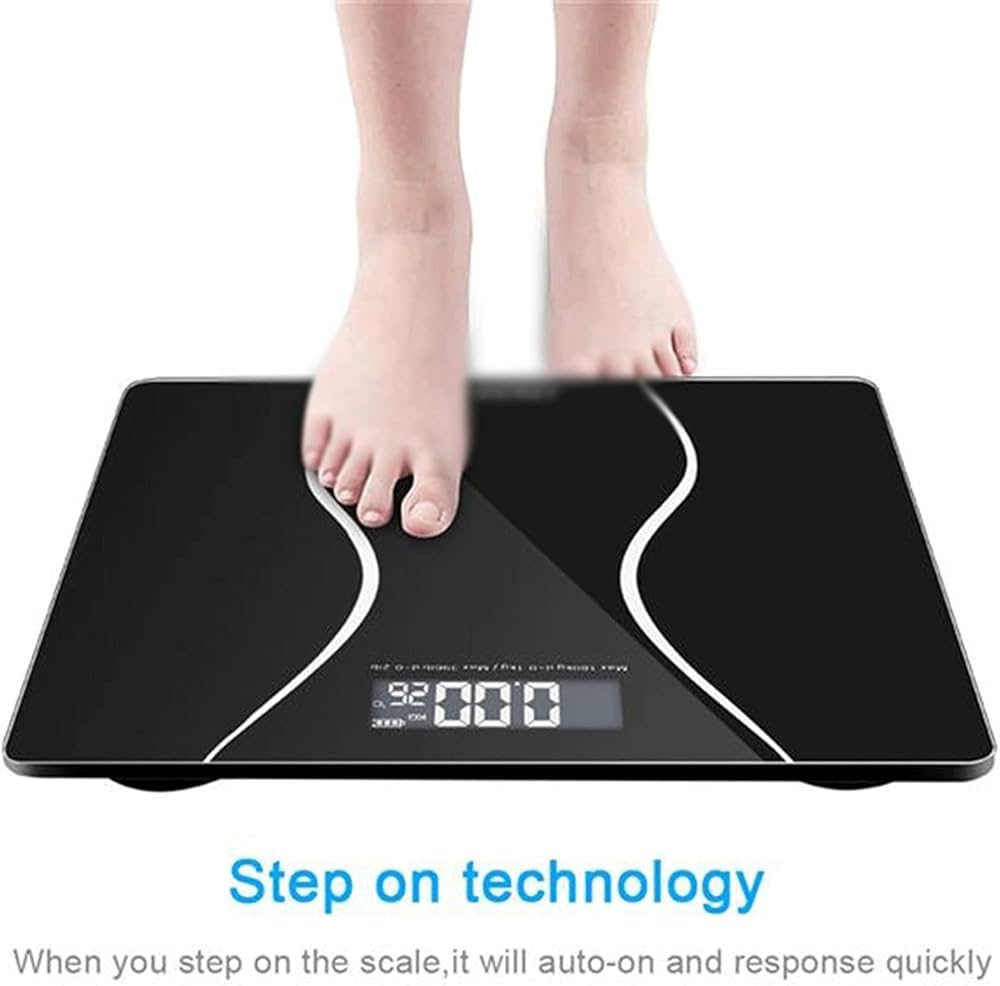
I stepped on my bioimpedance scale on August 1st and nearly fell off. The app told me my body fat percentage had jumped from 24.3% to 32.1% in four weeks. My muscle mass had dropped by six pounds. My visceral fat score had gone from "healthy" to "elevated." I stared at the numbers for a solid minute, trying to process what I was seeing. I hadn't changed my diet. I hadn't stopped going to the gym. If anything, I'd been more consistent with my workouts because I was trying to outrun the stress of Portland's heat wave. And yet, according to my scale, I was falling apart.
Then I looked at the weather data. July 2026 was the hottest month on record for Portland. Twelve consecutive days over 95°F. Three days over 102°F. My apartment, which has no air conditioning, was regularly hitting 88°F by mid-afternoon. I was sweating constantly. I was drinking water by the liter. And I was doing all of this while my scale was trying to measure my body composition through electrical impulses sent through my feet. Electrical impulses that travel differently through hydrated, overheated tissue than they do through normal tissue. My body hadn't changed. My scale's ability to measure my body had changed. And the difference between 24.3% and 32.1% body fat was not six pounds of fat. It was the difference between a 72-degree morning and a 92-degree evening.
I know this because I did something that probably marks me as unhealthily obsessed: I scheduled a DEXA scan the same week I got the shocking scale reading. DEXA is the gold standard for body composition. It uses low-dose X-rays to differentiate between bone, fat, and lean tissue. It doesn't care about your hydration status. It doesn't care about your skin temperature. It just measures what you're made of. The DEXA scan showed my body fat at 25.8%. Not 24.3%, not 32.1%, but 25.8%. Up slightly from my last scan in June, which made sense given the stress eating I'd done during the worst of the heat, but nowhere near the catastrophe my scale was reporting. My muscle mass was essentially unchanged. The six pounds my scale said I'd lost were still there, attached to my bones, doing their job. The scale was wrong by 6.3 percentage points. That's the difference between "athletic" and "overweight" in most fitness apps. That's the difference between a healthy body and a body that needs intervention. And it was entirely caused by heat and hydration.
Here's the science, which I spent three days reading because I was furious and needed to understand why my expensive scale had betrayed me. Bioimpedance analysis—what most consumer scales use—works by sending a tiny electrical current through your body and measuring the resistance. Fat has low conductivity. Muscle and water have high conductivity. The scale uses the resistance measurement to estimate your body composition. But the assumption built into every bioimpedance algorithm is that your hydration status is normal and your skin temperature is normal. In a heat wave, neither of those things is true. Your total body water increases because you're drinking more. Your skin temperature increases because you're hot. Your sweat changes the conductivity of your skin. The electrical current takes different paths through your body. And the scale, which has no way to measure these environmental variables, interprets the changed resistance as "more fat." It's not more fat. It's more heat.
I started testing this systematically. Every morning for two weeks, I weighed myself and measured my body composition at three different times: 6 AM, when my apartment was coolest; 2 PM, when it was hottest; and 10 PM, after I'd been hydrating all day. The differences were staggering. At 6 AM, with the apartment at 74°F and my body in a fasted, cool state, the scale read 26.1% body fat. At 2 PM, with the apartment at 89°F and my body temperature elevated from the heat, it read 31.4%. At 10 PM, after drinking three liters of water throughout the day, it read 29.7%. Same body. Same scale. Different numbers based entirely on temperature and hydration. The scale was not measuring my body composition. It was measuring the conditions in my apartment.
This matters because people make real decisions based on these numbers. I almost did. When I saw that 32.1% reading, my first thought was that I needed to cut calories. Drastically. I started planning a 1,200-calorie diet in my head. I started researching fat-burning supplements. I started mentally canceling my gym membership because "obviously" my workouts weren't working. If I hadn't had the DEXA scan scheduled already—if I hadn't been in the habit of getting quarterly scans as part of my health tracking—I would have made changes to my diet and exercise based on data that was completely false. I would have undereaten during a heat wave when my body actually needed more calories to maintain thermoregulation. I would have overtrained to "fix" a problem that didn't exist. I would have stressed myself out, degraded my health, and blamed myself for failing when the failure was entirely technological.
I've talked to other people about this. My gym buddy, who also has a smart scale, saw a similar jump in July. She cried. She told me she felt like she'd "let herself go" despite doing everything right. Another friend, a runner who tracks her body composition obsessively, considered stopping her marathon training because her scale said she was gaining fat while running 40 miles a week. None of them had DEXA scans to fall back on. None of them knew that the heat was distorting their data. They just saw numbers that told them they were failing, and they believed it. Because we trust technology. Because numbers feel objective. Because it's easier to blame yourself than to blame a device that cost $150 and has a four-star rating on Amazon.
The fitness industry is complicit in this. They sell us these devices with promises of "accurate body composition tracking" and "personalized health insights." They don't tell us that the accuracy depends on stable environmental conditions. They don't put a warning label that says "results may vary by 6+ percentage points in temperatures above 85°F." They don't acknowledge that climate change is making their products less reliable in exactly the places where people are most likely to use them. It's not just scales, either. The handheld body fat analyzers, the gym machines with bioimpedance handles, the smart mirrors that claim to measure your composition—they all have the same limitation. They assume a stable, temperate environment. And that assumption is becoming less valid every summer.
I've started doing something that feels radical in the age of quantified self: I ignore my scale during heat waves. I weigh myself for the trend, but I don't look at the body composition numbers. I know they're garbage. I know that my body fat percentage is not actually fluctuating by 8% in a month. I know that the six pounds of muscle my scale said I lost are still there, flexing and contracting and keeping me alive. I rely on other metrics instead. How do my clothes fit? How do I feel during my workouts? What's my energy level? What's my sleep quality? These are subjective, yes. They're not as precise as a number on a screen. But they're also not distorted by the temperature in my apartment.
I also started measuring myself with a tape measure once a week. Old school. Waist, hips, thighs, arms. No electricity. No algorithms. Just fabric and numbers. My measurements in July were essentially identical to my measurements in June. My waist didn't grow. My arms didn't shrink. My body was the same shape it had been before the heat wave started. The scale said I'd transformed into a different person. The tape measure said I was fine. I believe the tape measure. I believe my DEXA scan. I believe the mirror. I do not believe my bioimpedance scale when it's 90 degrees in my bathroom.
The broader lesson here is about the limits of technology in a changing climate. We have built an entire health and fitness ecosystem around devices that assume environmental stability. Smart scales, fitness trackers, sleep monitors, heart rate variability apps—they all work best in a narrow band of conditions that is getting narrower every year. As the climate changes, as heat waves become more common and more intense, these devices are going to become less reliable. They're going to give us bad data. They're going to make us think we're sick, or fat, or overtrained, or under-recovered, when we're actually just hot. And if we don't learn to question the numbers, we're going to make ourselves sicker trying to fix problems that don't exist.
I'm not going to throw my scale away. It's useful in October, when Portland is cool and rainy and my apartment stays at a steady 68°F. But I've learned its limitations. I've learned that it's a device, not an oracle. I've learned that my body knows things that my scale doesn't. And I've learned that in a heat wave, the most accurate measurement of my health is not a number on a screen. It's whether I can make it through my workout without feeling like I'm going to pass out. It's whether I can sleep through the night without waking up drenched in sweat. It's whether I have the energy to play with my dog when I get home from work. These are not quantifiable. They're not trackable in an app. But they're real. And in a world where the technology is increasingly unreliable, they might be the only metrics we can trust.
Has anyone else seen their body composition numbers go haywire during the heat? I'm starting to think we need a "summer mode" for all fitness devices. One that just says "it's hot, your numbers are wrong, go drink some water."
The thing that really broke my brain was when I realized that my scale's app was comparing my July numbers to my June numbers without any environmental context. The app has a "trend analysis" feature that draws lines between data points and tells you whether you're "improving" or "declining." My line in July looked like a cliff. Straight down. The app sent me a push notification: "Your body composition has declined significantly. Consider reviewing your diet and exercise plan." It had no idea that Portland was experiencing a heat dome. It had no idea that my apartment was 15 degrees hotter than usual. It had no idea that I was drinking twice as much water as normal. It just saw two numbers, calculated the difference, and decided I was failing. The app was not just wrong. It was cruel. It took a person who was already stressed about the heat and the wildfire smoke and the general state of the world, and it told her she was getting fat. Based on physics that a high school student could explain.
I started looking into how these algorithms are built. Most consumer bioimpedance devices use something called the Cole-Cole model, which assumes that the body is a cylinder of conductive tissue with uniform properties. It's a simplification. A useful one, under normal conditions. But the model doesn't account for peripheral vasodilation—the way your blood vessels expand near the skin surface to release heat. It doesn't account for the increased extracellular fluid that comes from aggressive hydration. It doesn't account for the electrolyte changes that happen when you sweat out sodium and potassium for hours every day. All of these heat-related physiological changes alter the electrical conductivity of your body in ways that the model interprets as "more fat." The model is not broken. It's just being used outside its design parameters. And nobody tells you that when you buy the scale.
I called the manufacturer's customer service line. I explained the issue. The representative read me a script about "ensuring consistent measurement conditions" and "weighing at the same time every day." I asked her if the company had tested the device in temperatures above 85°F. She said she didn't have that information. I asked if there was a temperature correction factor in the algorithm. She said she didn't know. I asked if the company was aware that climate change was making their product less accurate for millions of users. There was a long pause. Then she said, "I can transfer you to technical support." I hung up. I knew what technical support would say. They would say the device works as designed. They would say the user manual recommends a "cool, dry environment." They would say it's not their fault that my environment is neither cool nor dry. And technically, they'd be right. But practically, they're selling a product that becomes less useful as the world gets hotter. That's not a customer service problem. That's a product design problem.
My trainer at the gym, who sees this issue with clients every summer, told me something that stuck with me. "Your body is not a spreadsheet," he said. "It's a biological system that responds to temperature, stress, sleep, hydration, and a hundred other variables that your scale can't measure. The number on the screen is one data point. It's not the truth." He's right. But we've been conditioned to believe that the number is the truth. We post our body fat percentages on social media. We compare them to our friends. We judge our progress by whether the number goes up or down. And when the number goes up by 8% in a month because of a heat wave, we don't question the number. We question ourselves. We question our discipline. We question our worth. That's the real damage that these devices do in extreme heat. Not the bad data, but the psychological weight of that bad data.
I've started a small rebellion in my fitness circle. I tell everyone about the heat effect. I show them my DEXA scan. I show them my scale readings from three different times of day. I explain the bioimpedance model and its limitations. Some of them look at me like I'm making excuses for being out of shape. Others look relieved. One friend, who had been secretly starving herself because her scale said she'd gained 5% body fat in July, actually cried when I showed her the data. "I thought I was broken," she said. "You're not broken," I told her. "Your scale is broken. And it's broken because the world is hotter than it used to be, and the people who built it didn't plan for that."
So here's what I'm doing now. I'm measuring my body composition in October, when the weather is stable and cool. I'm using that as my baseline. I'm tracking my tape measurements through the summer, not my scale numbers. I'm paying attention to how I feel, how I perform, how my clothes fit. And I'm treating my smart scale like what it is: a device that works well in some conditions and poorly in others. It's not a oracle. It's not a judge. It's a tool, and like all tools, it has limitations. The trick is knowing those limitations and not letting the tool convince you that you're the problem.
If you're in Portland, or Phoenix, or Houston, or anywhere else that's been baking this summer, and your scale is telling you that your body composition has fallen off a cliff, please consider this: your body probably hasn't changed. The conditions under which you're measuring it have changed. The heat is distorting the data. The hydration is distorting the data. The stress is distorting the data. And the algorithm, which was built for a world that no longer exists, is interpreting all of that distortion as failure. You're not failing. You're surviving a heat wave. And survival doesn't always look good on a spreadsheet.
