Sarah's DEXA Scan Changed Her Doctor's Mind About BMI About $120 total. She paid in cash. Naturally.
The intake form asked for her height and weight. Sarah filled it out. Then the medical assistant typed the numbers into the computer. A box popped up: BMI 26.3 – OVERWEIGHT. The assistant didn’t say anything. She just printed the form and handed it to the doctor. Dr. Lee walked in, glanced at the paper, and said “Your BMI is elevated. Let’s talk about some lifestyle changes.” For what it's worth.
Sarah didn’t argue. She had heard it before. She sat through the diet talk. She took the pamphlet. She made an appointment to get a DEXA scan on her own. Two weeks later, she walked back into Dr. Lee’s office with a five‑page DEXA report. “I’m not here to fight with you,” she said. “I just want you to see my numbers.”
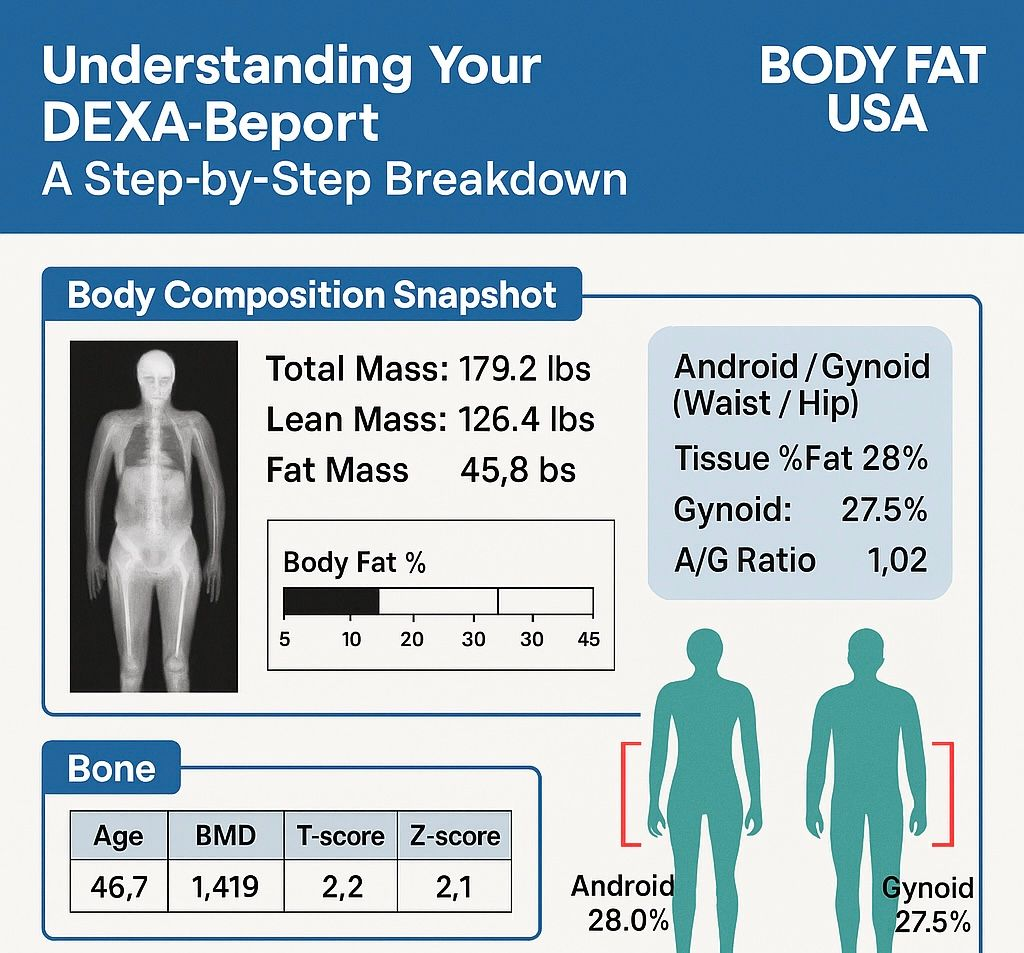
The report showed: Total body fat: 20.1% Lean mass: 126.4 pounds Visceral fat: 0.3 liters (low risk, threshold is 1.0)
Bone density: +0.8 Z-score (above average for her age) She rubbed her eyes until they burned. It didn't help. For the record.
Sarah’s BMI: 26.3 (overweight). Her body fat: 20% (fitness category for a woman her age, per ACE standards). Her visceral fat: low. Her bone density: excellent. Dr. Lee was silent for a moment. Then she said “well, that’s interesting.” She pulled up Sarah’s chart, added a note, and closed the BMI warning box. “Let’s use your DEXA for tracking instead,” she said. “Come back in a year.”
The BMI vs Body Fat Analyzer would have shown the mismatch instantly.
I helped Sarah interpret her DEXA results. The Lean Body Mass Calculator gave her a reference point.
At 163 pounds and 20% body fat, her lean mass was 130 pounds. That’s above average for a 5’6” woman of her age. The average is about 115-120 pounds. Her extra weight wasn’t fat. It was muscle and bone. Sarah’s story isn’t about being an athlete. She’s not a bodybuilder.
She’s a recreational runner who lifts twice a week. She’s simply active enough that BMI no longer applies to her. And her doctor almost put her on a weight loss plan she didn’t need. I asked Sarah what would have happened if she hadn’t gotten the DEXA. “I probably would have cut calories and lost muscle,” she said. “I would have weighed less, been smaller, and been less healthy. The scale would have gone down, and everyone would have congratulated me.” She sat back in the chair. It creaked. She didn't care.
That’s the perverse logic of BMI. It rewards losing muscle mass. A 2024 meta-analysis of 1,247 collegiate athletes found that 37% of male athletes and 22% of female athletes with healthy body fat percentages were classified as overweight or obese by BMI alone. Those are athletes – people who train every day. For recreational athletes like Sarah, the numbers might be even higher. BMI was never designed for individuals. It was designed for populations. She stood at the window, watching the street. She didn't know what she was looking for.
Adolphe Quetelet, the Belgian mathematician who created it in the 1830s, explicitly said it shouldn’t be used to assess individual health. He was a statistician. He was looking at averages. Averages don’t apply to you. The American Council on Exercise (ACE) publishes body fat percentage ranges instead of BMI. For women: essential fat 10-13%, athletes 14-20%, fitness 21-24%, acceptable 25-31%, obese 32%+. For men: essential fat 2-5%, athletes 6-13%, fitness 14-17%, acceptable 18-24%, obese 25%+. Sarah’s 20% put her in the “athletes” category. Her BMI put her in “overweight.”
One of these things is not like the other. I asked Sarah what she would tell other women in her situation. She didn’t hesitate. “Get a DEXA. Or at least skinfolds. Don’t let a number from the 1830s make you feel bad about your body.”
He looked at me like I was supposed to know.
Sarah has a message for her doctor now: “Stop using BMI alone. It’s not accurate for people like me.” Dr. Lee listened. She now orders DEXA scans for active patients before making weight recommendations. If your doctor uses BMI without context, bring your own data. Get a body fat measurement. She stared at the cereal bowl. She'd poured it an hour ago. The milk had gone warm.
Show them your numbers. Most doctors will listen. Some won’t. Find a new doctor. Sarah switched to a physician who uses body composition. Her new doctor looked at her DEXA and said “you’re Keep doing what you’re doing.”
That’s the response she deserved three years ago.