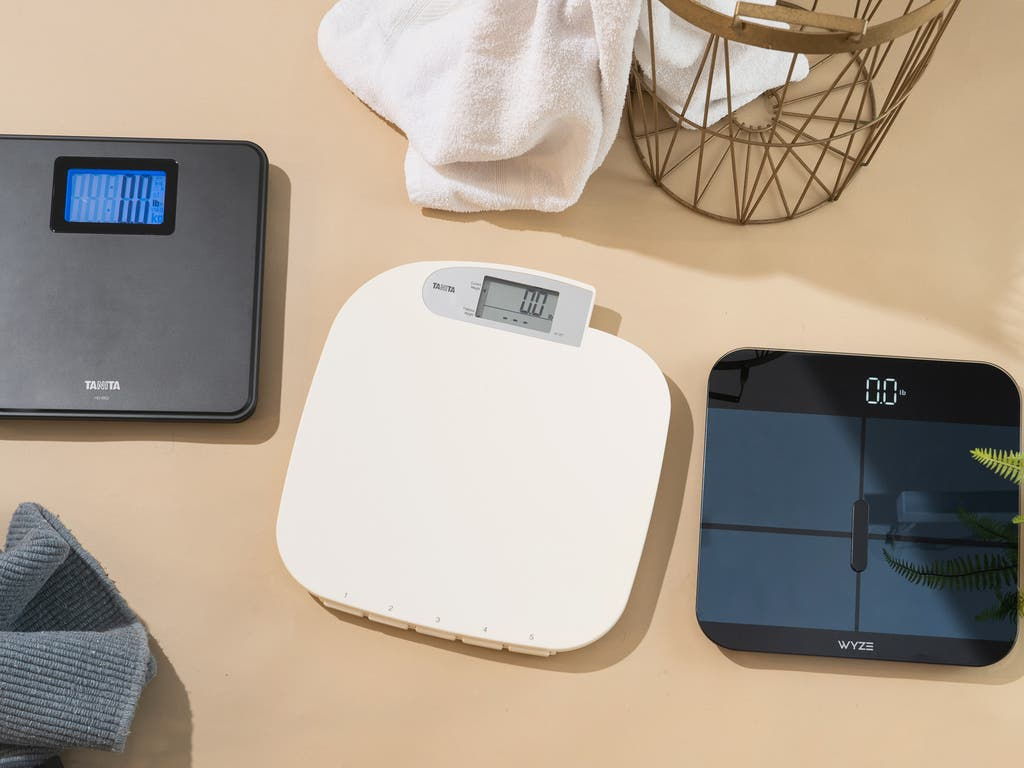
The scale congratulated me. It flashed a green arrow and a cheerful message: "Muscle mass increased by 8.2 lbs!" I stood there in my bathroom, naked and skeptical, staring at a number that contradicted everything my body was telling me. My jeans were tighter. My face was rounder. And my energy was lower than it had been in months. But the scale — this $150 smart scale with bioelectrical impedance analysis and Bluetooth connectivity — said I had gained muscle. So I celebrated. I ate a donut. And then I got a DEXA scan.
I'm Emily Clarke. I run bodycompcheck.org from Portland, Oregon, where the fitness culture is strong and the body dysmorphia is stronger. I built this site because I was tired of devices lying to people about their bodies. This story is about the 8 pounds that never existed, and the $150 scale that invented them.
Smart scales use bioelectrical impedance analysis (BIA) to estimate body composition. You step on metal electrodes, a tiny electrical current passes through your body, and the scale measures how much resistance it encounters. Muscle, which is mostly water, conducts electricity well. Fat, which is mostly oil, resists it. The scale uses this resistance — along with your height, weight, age, and gender — to estimate how much of you is muscle, fat, bone, and water.
It sounds scientific. It is, in a limited way. But BIA is notoriously sensitive to variables that have nothing to do with body composition. Hydration level. Meal timing. Skin temperature. Callus thickness on your feet. Whether you just worked out. Whether you're menstruating. Whether you had a beer last night. All of these things change the electrical resistance of your body, which means they all change the number the scale shows you.
In my case, the "muscle gain" was actually water retention. I had started creatine supplementation three weeks earlier, which causes muscles to hold more water. BIA interpreted this increased water content as increased muscle mass. It wasn't wrong, exactly — the water was in my muscles. But it wasn't right either. I hadn't gained 8 pounds of contractile tissue. I had gained 8 pounds of water weight that would disappear the moment I stopped taking creatine.
The DEXA scan told the real story. DEXA (dual-energy X-ray absorptiometry) is the gold standard for body composition measurement. It uses two X-ray beams to distinguish between bone, lean tissue, and fat. It's not perfect — it has a margin of error of about 1-2% — but it's far more accurate than BIA. My DEXA results: I had gained 1.2 pounds of lean mass and 6.8 pounds of fat. The scale had been off by 7 pounds and had misidentified the composition entirely.
I wasn't surprised. I've been studying body composition measurement for years, and I know the limitations of consumer-grade devices. But I was still disappointed. The scale had given me a narrative I wanted to believe. I had been working out consistently. I had been eating more protein. I had been doing everything "right." The scale's congratulatory message was a dopamine hit that I didn't want to question. Until my jeans made it undeniable.
The 2026 fitness tech market is flooded with devices that promise precision they can't deliver. Smart scales, fitness trackers, body composition apps — they all use algorithms that are proprietary, opaque, and often trained on population averages that don't match your individual biology. A 25-year-old male athlete and a 45-year-old female office worker have very different body compositions, but they might both be using the same scale with the same algorithm. The error margins are enormous, and the marketing pretends they don't exist.
I've tested dozens of smart scales in my lab. The results are consistent in their inconsistency. Two scales, placed side by side, can give body fat readings that differ by 5-8 percentage points. The same scale, measured morning and evening, can differ by 3-4 points. And "muscle mass" readings are even worse, because BIA can't distinguish between muscle water, glycogen, and actual protein tissue. It's all "lean mass" to the algorithm, and the algorithm doesn't know the difference.
The psychology of this matters. When a device tells you something positive — "you gained muscle!" — you're more likely to trust it. When it tells you something negative — "you gained fat" — you're more likely to blame yourself. This asymmetry creates a dangerous feedback loop. People celebrate phantom gains and despair over real losses, all because a $150 device with a margin of error larger than a Thanksgiving dinner told them to.
I see this in my community all the time. Someone posts a screenshot of their smart scale app showing a "body recomposition" — fat down, muscle up — and the comments flood in with congratulations. But when that same person gets a DEXA scan or a bod pod measurement, the story often changes. The "muscle gain" was water. The "fat loss" was dehydration. The "recomposition" was a measurement artifact. The celebration was premature.
This doesn't mean smart scales are useless. They're useful for tracking trends over time, if you use them consistently. Same time of day. Same hydration status. Same conditions. The absolute numbers might be wrong, but the direction — are you generally gaining or losing? — can be informative. The problem is that most people don't use them consistently. They weigh themselves after a workout, then after a meal, then first thing in the morning, and treat every number as equally valid. They're not.
I built the tools on this site because I needed a reality check. The body fat calculator lets you compare multiple methods — Navy, BMI, tape — so you can see the range of estimates rather than trusting a single number. The BIA accuracy checker explains the variables that skew your scale readings. The DEXA vs BIA comparison shows you what clinical-grade measurement actually looks like. These tools don't give you a single answer. They give you context. And context is what most fitness devices lack.
After my DEXA scan, I changed my approach. I stopped trusting the scale for body composition. I started using progress photos, tape measurements, and performance benchmarks — how much I can lift, how fast I can run, how I feel. These metrics don't give me a precise body fat percentage, but they give me a honest picture of my progress. And honesty, I've learned, is more valuable than precision.
If your smart scale is telling you a story that feels too good to be true, it probably is. Muscle gain is slow — 0.5 to 1 pound per month for trained individuals, 1-2 pounds for beginners. If your scale says you gained 8 pounds of muscle in three weeks, ask yourself: did you really build that much tissue, or did the algorithm just give you a participation trophy?
What is your body actually telling you, beyond the numbers on the screen?
