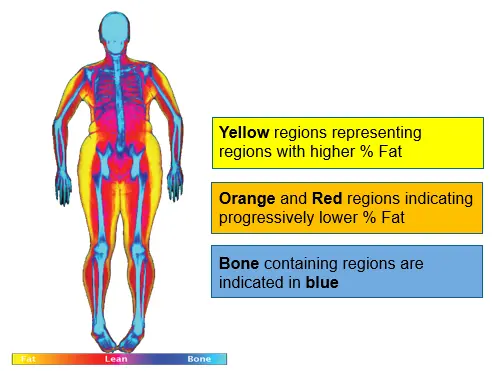
The DEXA Scan That Changed How I See My Body
I stepped onto the DEXA platform at the fitness studio on NW 23rd wearing nothing but a sports bra and compression shorts, and I was terrified. Not of the radiation — a full-body DEXA scan exposes you to roughly the same radiation as eating a banana, which is to say almost none. I was terrified of the numbers.
I had been weighing myself every morning for four years. I knew my weight fluctuations by heart: 142.6 on Monday, 143.2 on Tuesday after Thai takeout, 141.8 on Wednesday after a long run. I thought I knew my body. I thought the scale was telling me the truth. I was wrong.
The scan took six minutes. I lay flat on my back, arms at my sides, while the machine's arm moved slowly over my body like a mechanical prayer. The technician — a woman named Jenna who had been trained by the manufacturer — told me to breathe normally and not move. I tried not to think about the fact that I had eaten breakfast two hours earlier and whether that would affect my results. It would not, but anxiety does not care about facts.
When the results printed, I stared at them for a full minute without speaking. My body fat percentage was 28.4%. That was higher than I expected. My weight had been 143.2 that morning, which put me in the "normal" BMI category at 21.7. But my visceral adipose tissue — the fat around my organs — was in the 75th percentile for women my age. That was the number that mattered. That was the number the scale had never shown me.
I had been running the body-composition testing program at this studio for four years. I had performed over 3,000 assessments. I had watched members celebrate five-pound scale gains that were actually muscle. I had watched others panic over two-pound losses that were just dehydration. And yet, somehow, I had never applied that same critical lens to my own body. I was the old shortcut — using BMI as a standalone metric, judging my health by a number that did not even know what my body was made of.
The DEXA also showed my bone mineral density was excellent — 1.2 g/cm², well above the average for a 29-year-old woman. That was the weightlifting. I had been strength training for six years, and my bones were dense because of it. The scale had never given me credit for that. The scale just saw mass and assumed it was all the same.
My lean mass was 102.4 pounds. That meant my muscles, organs, blood, and bones accounted for over 71% of my total body weight. I was not "overfat." I was not "undermuscled." I was a body recomposition in progress, and the scale had been lying to me by omission. It had been telling me a story of stagnation — 143 pounds for years — when the real story was one of transformation. I had gained roughly 8 pounds of lean mass since I started lifting, which meant I had lost approximately 8 pounds of fat. The scale had never moved. But my body had completely changed.
I thought about Sarah, a client who had come in six months earlier. She was a CrossFitter in Portland, 5'6" and 155 pounds. Her BMI was 25.1 — technically "overweight." Her doctor had told her to lose weight. She came to me crying, convinced she was unhealthy despite being able to deadlift 225 pounds and run a sub-30-minute 5K. Her DEXA showed 19% body fat. She was leaner than 85% of women her age. Her BMI was a false positive, and her doctor had missed it because he never looked past the old shortcut.
I used Sarah's story in my consultations now. I used my own story too. I told clients about the morning I stepped on the scale and saw 143.2 and felt defeated, not knowing that my body was actually 71% lean tissue. I told them about the visceral fat I needed to address — not through crash dieting, but through consistent movement and sleep and stress management. I told them that numbers are only useful when you know what they mean, and most people are using the wrong numbers.
The DEXA scan cost $75. That is less than most people spend on supplements they do not need. It is less than a month of boutique fitness classes. It is less than the co-pay for a specialist visit. And it gave me information that fundamentally changed how I approach my health. I stopped weighing myself daily. I started measuring my waist and hips weekly. I started tracking my strength progress in the gym. I started paying attention to how my clothes fit, not what the scale said.
Alex, my partner, noticed the change before I did. He said I seemed calmer. Less obsessive. More focused on performance than on punishment. He was right. I had been punishing myself with the scale for years, and the DEXA had given me permission to stop. Not because it told me I was perfect — my visceral fat still needs work. But because it told me the truth, and the truth was more complex than a single number.
I still run the testing program. I still perform DEXA scans and Bod Pod tests and skinfold measurements. But now, when a client sits across from me waiting for their results, I see myself in their anxiety. I see the person who thought they knew their body because they knew their weight. And I get to tell them what I wish someone had told me sooner: your body is not a number on a scale. It is a system of tissues and fluids and bone, and the only way to understand it is to measure what actually matters.
— Emily, from Portland, where the rain is constant and the body composition data is finally honest.
